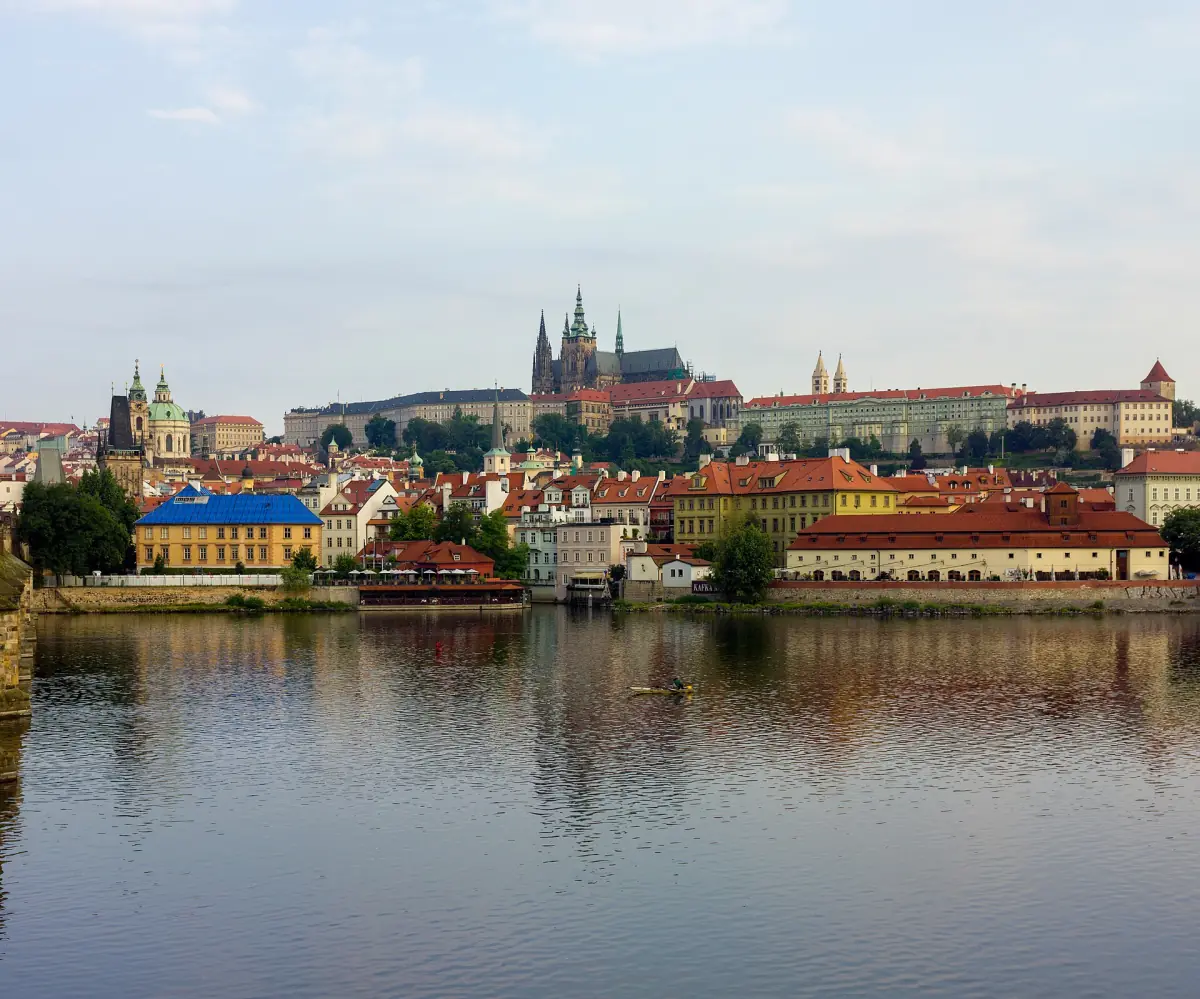
Charles Bridge history in short
The bridge replaced the Judith Bridge, which a flood destroyed in 1342. Work on the new bridge began under Charles IV in 1357, and the bridge was completed in 1402. Peter Parler (Petr Parléř) is named as the master builder.
For centuries the bridge was known as the Stone Bridge or the Prague Bridge. It has been called Charles Bridge only since 1870. Today it is 515.76 m long, 9.5 m wide and carries its walkway on 16 arches.
Tours that tell the story of the bridge
Guided walks over Charles Bridge and through the Old Town and Lesser Town, with live prices and availability.
Timeline of Charles Bridge
The main dates in the order they happened.
| Year | What happened |
|---|---|
| 1342 | A flood destroys the Judith Bridge, the predecessor of today's bridge |
| 1357 | Charles IV starts the new bridge; the foundation is dated 9 July |
| 1402 | The bridge is completed |
| 1683 | The bronze statue of St John of Nepomuk is erected |
| 1870 | The name Charles Bridge is introduced |
| 1883 | Horse trams start to cross the bridge |
| 1890 | A flood destroys 2 piers and 3 arches |
| 1905 | Electric trams start to run |
| 1908 | Buses start to cross the bridge |
| 1965 | Car traffic ends |
| 2002 | The bridge survives the August flood |
The foundation and its numbers
A date that looks like a pattern.
9 July 1357 at 5:31 a.m.
The tradition says the foundation stone was laid on 9 July 1357 at 5:31 a.m. The date and time are linked with the sequence 1, 3, 5, 7, 9, 7, 5, 3, 1. The story is part of the bridge's legend, so treat the minute as tradition rather than as a proven record.
Parler and the builders
Peter Parler (Petr Parléř) is named as the master builder of the bridge. The castle hill that you see from the bridge has its own page.
Prague Castle →Floods: 1890 and 2002
Two floods, two different outcomes.
1890: two piers and three arches lost
The flood of 1890 destroyed 2 piers and 3 arches of the bridge.
August 2002: the bridge holds
The bridge stood through the flood of August 2002. This is put down to reinforced pier foundations and to measures that keep floating debris from piling up at the piers.
From horse trams to a footbridge
Traffic on the bridge changed more than once.
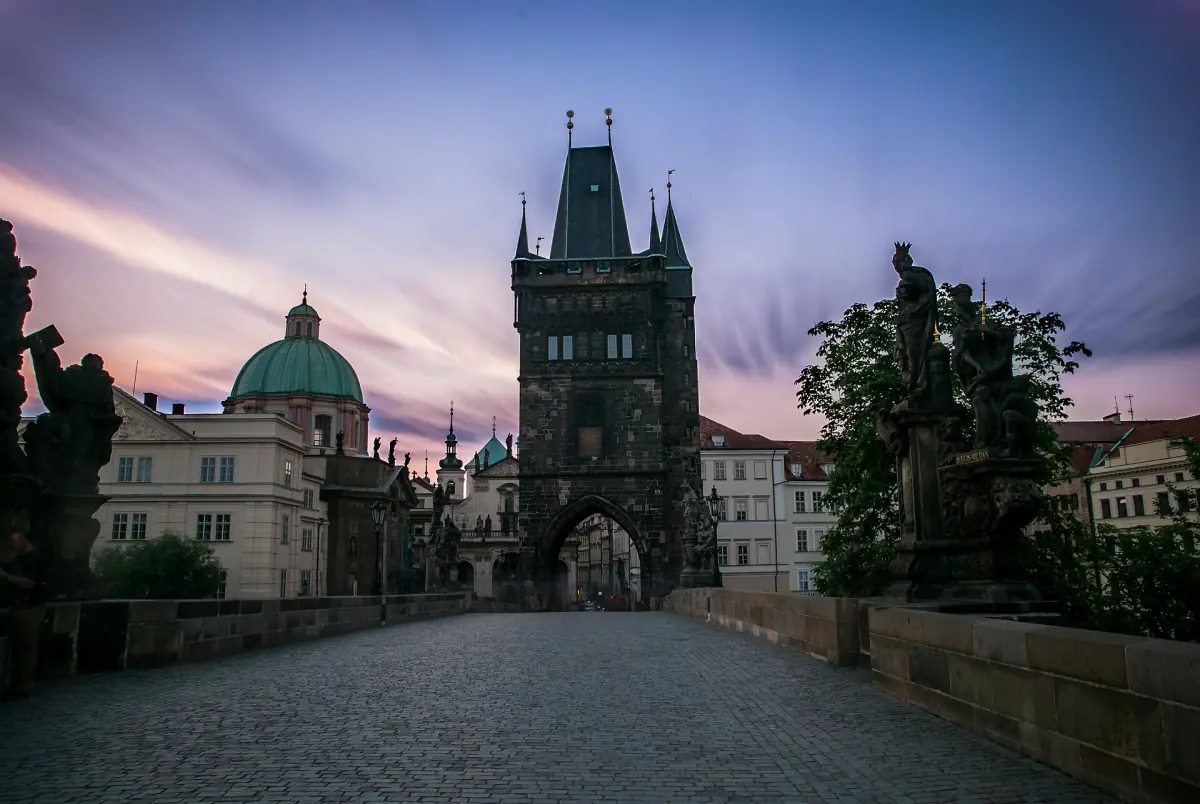
Horse trams ran on the bridge from 1883. Electric trams followed in 1905, and buses started in 1908. Car traffic ended in 1965, and since then the bridge is a pedestrian route. If you walk across today you share it with other visitors, musicians and sellers, not with vehicles.
Performing and selling on the bridge needs permission and a designated spot. A spontaneous performance can be stopped.
What you can still see today
Traces of each period on a single walk.
The arches and the piers
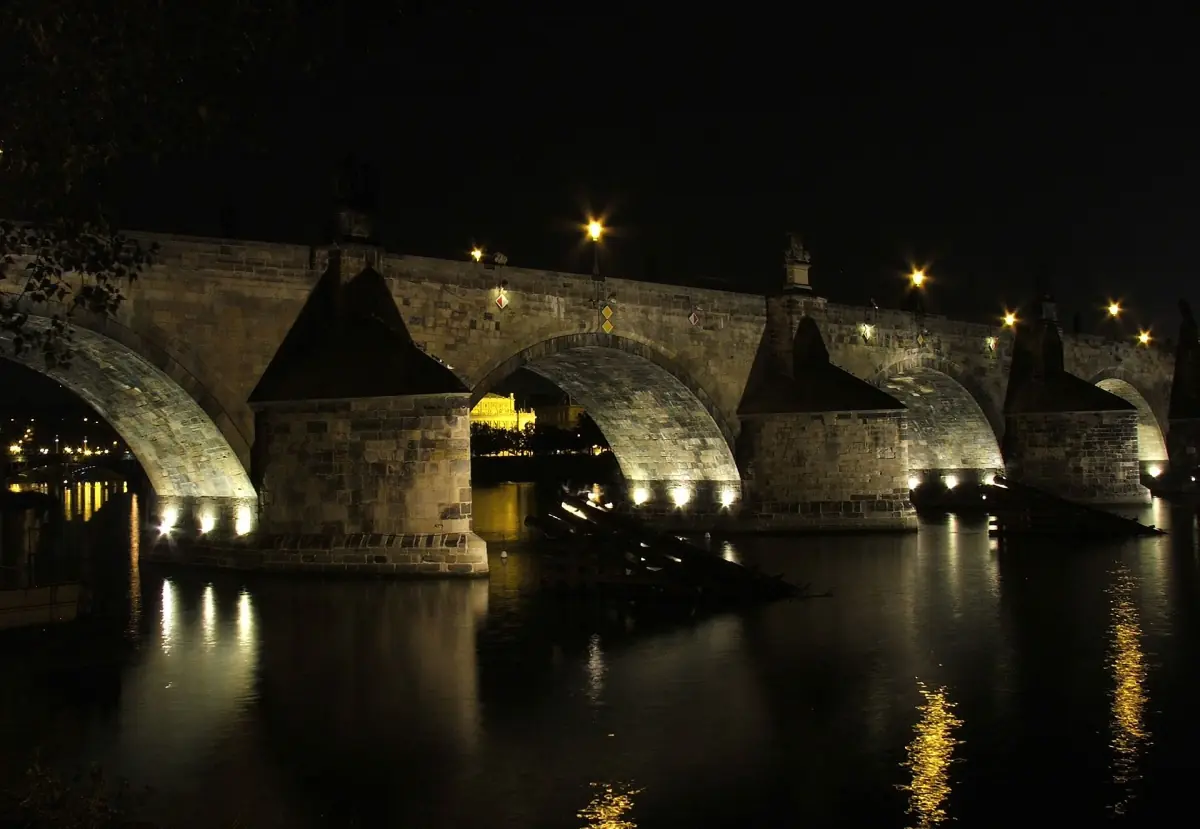
Look at the 16 arches from the riverbank or from a boat. The piers are the part of the bridge that floods tested in 1890 and 2002.
Vltava cruises →The gas lamps
The lamps on the bridge are gas lamps. They give the bridge its look after dark.
Charles Bridge at night →The statues
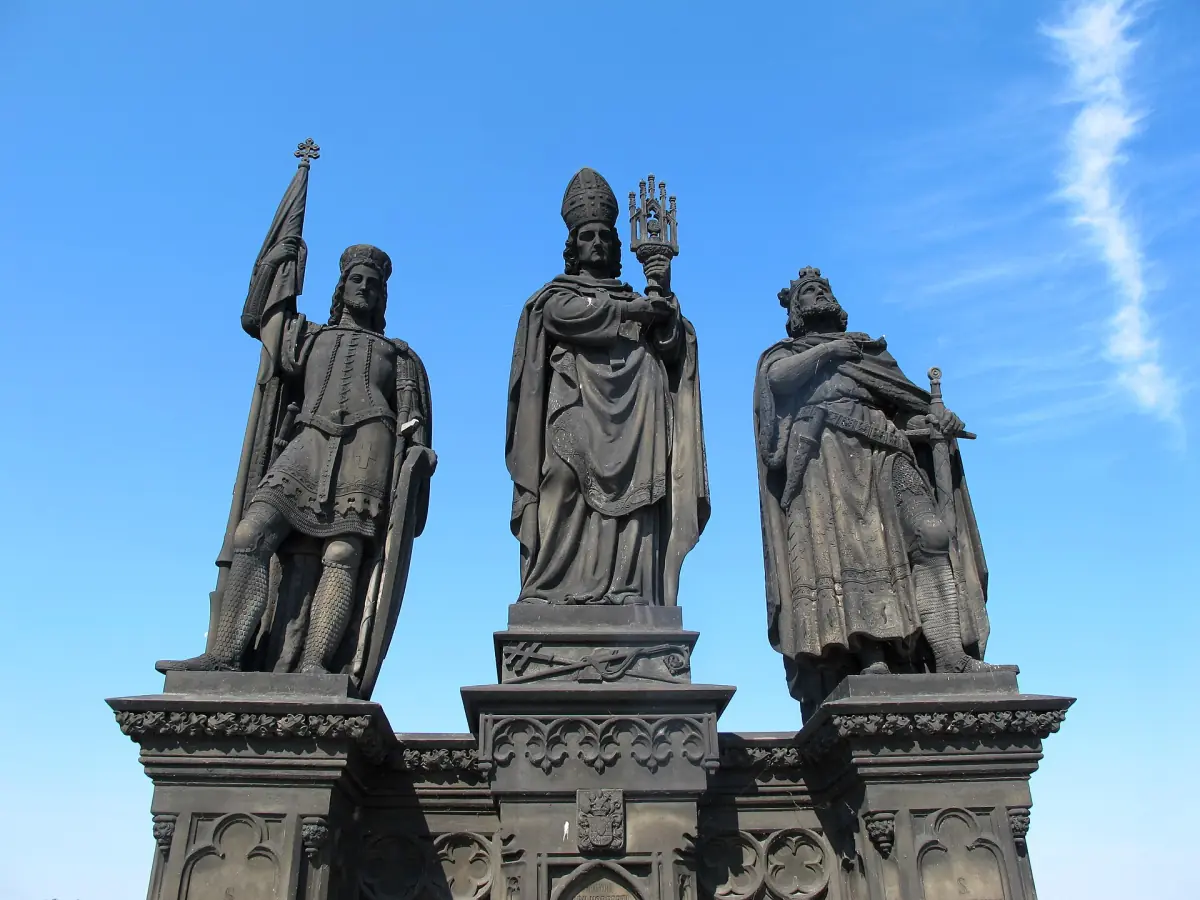
The Nepomuk bronze of 1683 is the oldest statue still standing in its original form.
The statues →See the history on your walk
Where the story continues.
Charles Bridge history: frequently asked questions
When was Charles Bridge built?
Construction began in 1357 under Charles IV, and the bridge was completed in 1402. A flood in 1342 had destroyed the earlier Judith Bridge.
Why is it called Charles Bridge?
It is named after Charles IV, who started the construction. The name Charles Bridge has been in use only since 1870. Before that it was called the Stone Bridge or the Prague Bridge.
Why do people mention the numbers 1, 3, 5, 7, 9?
The traditional foundation time is 9 July 1357 at 5:31 a.m. The date and time are linked with the sequence 1, 3, 5, 7, 9, 7, 5, 3, 1. The exact minute belongs to the tradition.
Did the 2002 flood damage the bridge?
The bridge stood through the August 2002 flood. The earlier flood of 1890 was more damaging: it destroyed 2 piers and 3 arches.
Can cars drive across the bridge?
No. Car traffic ended in 1965, and the bridge is a pedestrian route. Horse trams ran on it from 1883 and electric trams from 1905.